



September 18, 2025

September 10, 2025
July 3, 2025
January 10, 2025
India’s FY26 Growth at 7.4% Could Rise Under 2022-23 GDP Base Revision

Author
Shoonya Team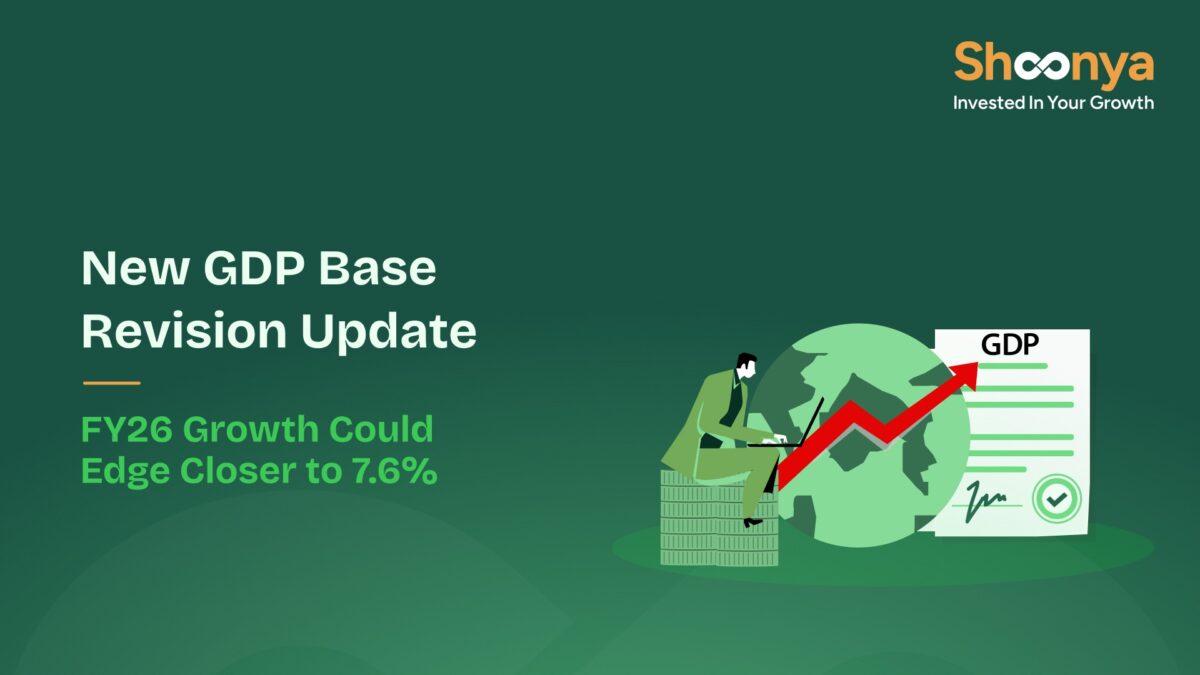
India will release GDP data under the new 2022-23 base year later this week, a shift that could alter FY26 growth estimates. Previous base-year updates have often changed headline numbers, especially when statistical coverage expands.
Advance estimates released on January 7 placed FY26 growth at 7.4%, based on the older 2011-12 base. Fresh estimates due on February 27 will reflect expanded datasets and updated calculations.
If past trends hold, FY26 growth could rise by around 0.25% points or more.
GDP Base Revision History: Growth Often Moves Higher
When the base year shifted to 2011-12 from 2004-05, growth estimates changed significantly:
- FY13 growth was revised upward by about 0.35 percentage points
- FY14 growth saw a much larger revision of nearly 1.9% points, lifting it to 6.9%
That revision incorporated data from the Ministry of Corporate Affairs, expanding corporate coverage in GDP calculations.
Earlier revisions were smaller:
- The shift to the 2004-05 base raised growth by about 0.04% points on average
- Revisions from the 1993-94 base resulted in changes of roughly 0.06% points
The pattern suggests improved data coverage tends to lift measured output rather than lower it.
Nominal GDP Impact Under Base-Year Changes
Nominal GDP has historically seen even bigger adjustments than real growth.
Across four revision cycles since the early 1980s, nominal growth has typically been revised upward by about 0.5% points. This better reflects the measurement of prices, services, and corporate activity.
For example:
- FY13 nominal growth was revised from 12.2% to 13.1%
- FY14 was revised from 12.3% to 13.6% after the 2011-12 base update
On average, nominal GDP levels have risen by roughly 1.7% after base revisions.
What the 2022-23 Base Year Could Change
The upcoming 2022-23 base year revision is expected to capture better, newer areas of the economy, including the digital sector. Updated consumption data and improved enterprise databases are also likely to influence estimates.
The impact goes beyond headline growth. A higher GDP base affects:
- Fiscal deficit ratios
- Debt-to-GDP metrics
- Medium-term macro projections
Nominal GDP revisions could also move India closer to the $5-trillion economy milestone. Budget estimates project GDP at around ₹393 lakh crore in FY27, a figure that could exceed ₹400 lakh crore after updated data are incorporated.
Conclusion
GDP base-year changes can reshape headline numbers and alter how the economy is measured. A higher GDP estimate would affect fiscal ratios, debt metrics and other macro indicators linked to overall output.
The February 27 release will show how the shift to the 2022-23 base year recalibrates FY26 growth and the broader macro picture.
Source: https://www.moneycontrol.com
Disclaimer: Investments in the securities market are subject to market risks; read all the related documents carefully before investing.


Explore Our Offerings

Stocks
Trade equities across NSE and BSE with zero delivery charges. Invest, hold or sell with a seamless experience.


Future & Options
Execute complex strategies with simple tools and real-time data.

IPOs
Apply to the latest IPOs in just a few taps. Stay updated and capture opportunities as they open.